Structured content & fields
Not everything is a blog post. Opening hours, team members, pricing tables and page settings are filled in as friendly forms — and saved as tidy structured data.
Filling a form
Each entry is a form built from your site's content model. A few things make it easier:
- Required fields are marked with a red asterisk, and each field can show a short hint or example.
- If something is missing when you submit, a summary appears at the top listing exactly which fields need attention — click one to jump straight to it.
- Made a change to a single field you regret? Use the small revert button next to it to put just that field back.
Common field types
- Text and rich text — short lines and long Markdown bodies (see Writing & formatting).
- Date / datetime — pick a date; some collections use it to order entries or for scheduled publishing.
- Boolean— an on/off switch (for example “featured”).
- Number, color and coordinates — for prices, brand colors, map pins, and the like.
- Image — opens the media picker (see Images & media).
Choosing from a list
Select fields offer a fixed set of options; relationfields link to another entry (for example a post's author or category). When there are many options, the field becomes a searchable combobox — start typing to filter, and use the clear button to reset.
Lists & repeatable items
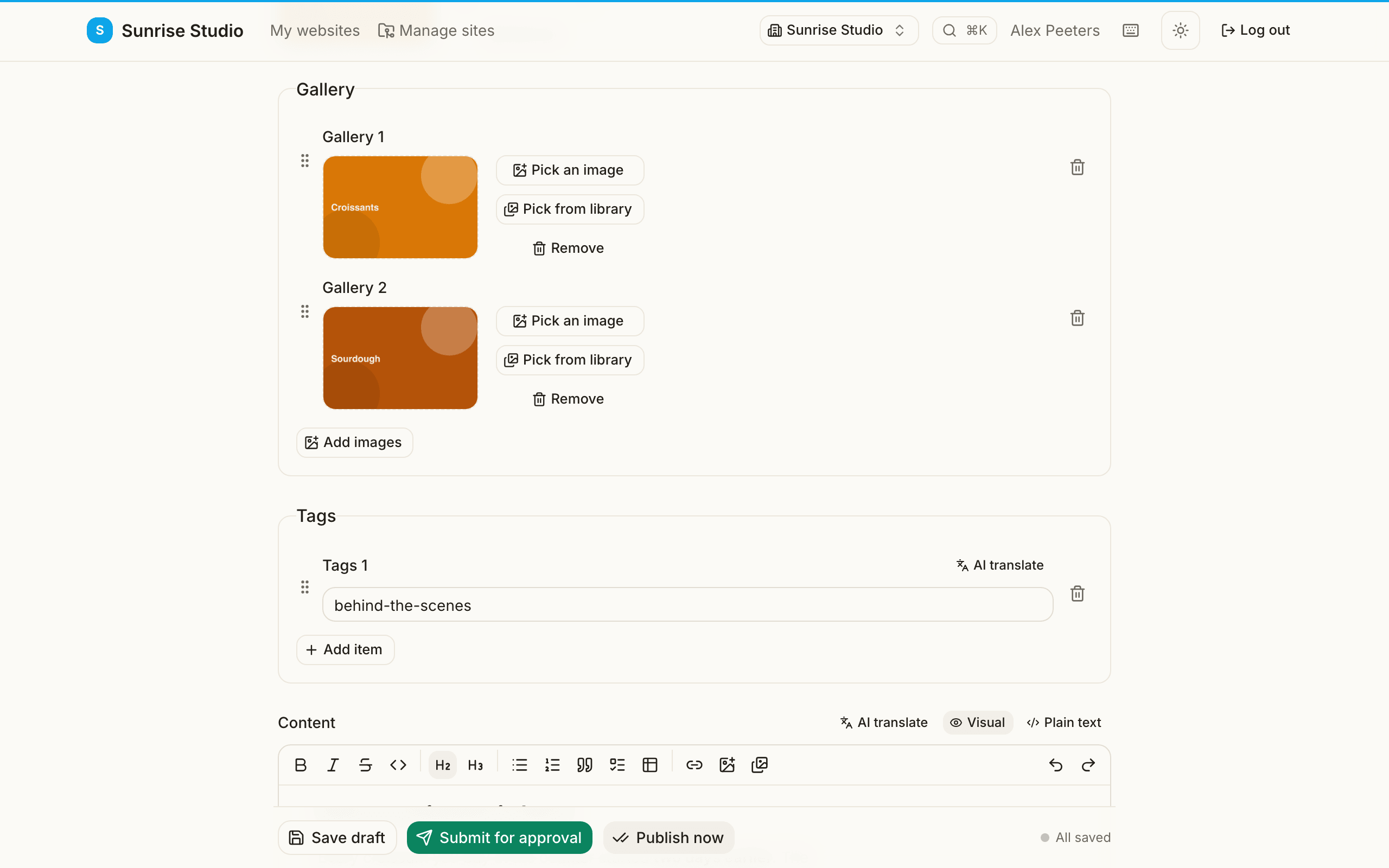
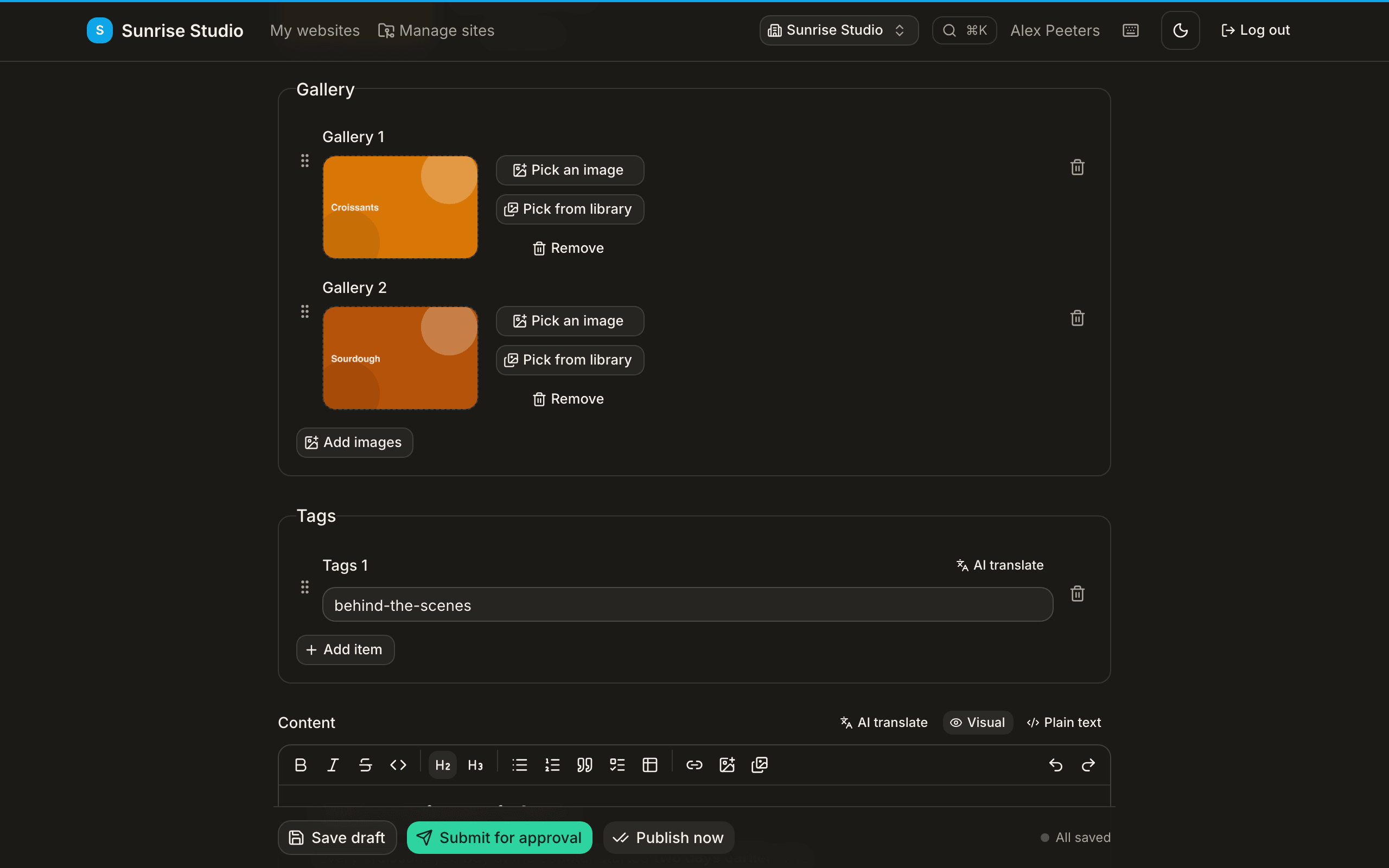
Some fields are lists — opening hours per day, team members, FAQ entries. You can:
- Add item to append a new row.
- Drag an item by its handle to reorder the list.
- Remove an item you no longer need.
The address (slug) preview
When you create a new entry, a live link preview shows the web address the page will get, derived from the title as you type. It updates instantly, so you can see (and tidy) the URL before saving.
SEO fields
Collections often include SEO fields — an SEO title, description, share image and a “don't index” toggle. As you type, a search-result preview shows roughly how the page will look in Google, and character counters turn amber when a title or description gets too long.